When a house stops fitting the way you live — the kitchen is cramped, there is one usable bathroom, the family has grown — the first instinct is often to move. In the Bay Area and Sacramento, it is worth doing the arithmetic first, because the cost of moving is mostly money you never see again.
What Moving Really Costs
- Real estate commissions on the sale, often the largest single cost
- Transfer taxes, escrow and title fees on both transactions
- A new mortgage rate that may be much higher than the one you have now
- Moving costs, and usually some repairs to sell the current house
- A higher property tax basis on the new purchase under Proposition 13
None of that money improves the house you end up in. A remodel puts the same budget into rooms you will use every day.
When Remodeling Makes Sense
- You like the neighbourhood, the schools and the commute
- The problem is a few rooms — kitchen, bathrooms, layout — not the whole location
- The lot has room for an addition or an ADU
- Your current mortgage rate is better than what you would get today
When Moving Makes Sense
If the problem is the location itself, the lot cannot accommodate what you need, or the work required would cost close to the value of the house, moving can be the better decision. A contractor should tell you that honestly.
Doing the Comparison
- Write down what the house is missing.
- Get a written price for the work that would fix it — kitchen, bathroom, addition or ADU.
- Estimate the full cost of selling and buying, including the change in mortgage and property tax.
- Compare the two numbers, and the disruption of each.
An ADU or room addition often solves the “not enough space” problem for less than a move, and a kitchen or bathroom remodel fixes most “this house does not work” complaints.
A Simple Way to Compare
Write the two options side by side. For moving: the selling costs on your current home, the buying costs on the next one, moving and repairs, and the difference in monthly mortgage and property tax over the years you expect to stay. For remodeling: the written price for the work, a contingency, and any temporary costs such as eating out while the kitchen is under construction. Most homeowners who do this exercise are surprised by how much of the moving budget disappears into fees.
Remodels That Change How a House Works
- Opening a closed kitchen to the living area
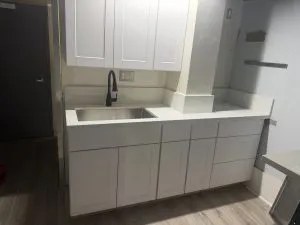
- Turning a small hall bathroom into a usable family bathroom
- Adding a primary suite or a second bathroom
- Converting a garage into an ADU for a parent, an adult child or rental income
- Re-planning storage so the house stops feeling cramped
Each of these solves a specific “this house does not work for us” problem without changing your address, your schools or your commute.
If you are planning a project, IronNest Construction (CSLB #1130134) gives a written fixed price after a free site visit, handles the permit, and keeps one project manager on the job. Request a free estimate — we reply within 3–6 business hours.
Common Questions
Does a remodel increase my property taxes?
In California, new construction such as an addition or ADU can be assessed and added to your tax base, but the rest of the house generally keeps its existing assessed value. Replacing finishes like a kitchen or bathroom is often treated differently from adding space. Check with your county assessor for your situation.
Can I stay in the house while it is remodeled?
For most kitchen and bathroom remodels, yes. A temporary kitchen and a plan for dust and access make it manageable. Whole-house projects or major structural work can make a short stay elsewhere worthwhile.
How do I know if my house is worth remodeling?
If the location, lot and structure are good and the problems are in specific rooms or the layout, a remodel usually makes sense. A site visit with a written price for the work gives you a real number to compare with the cost of moving.